Download our brochure

Enter your email or download instantly.

Karwar Urban Municipal Sewage Treatment Plant | 1.6 MLD MBR-Based STP

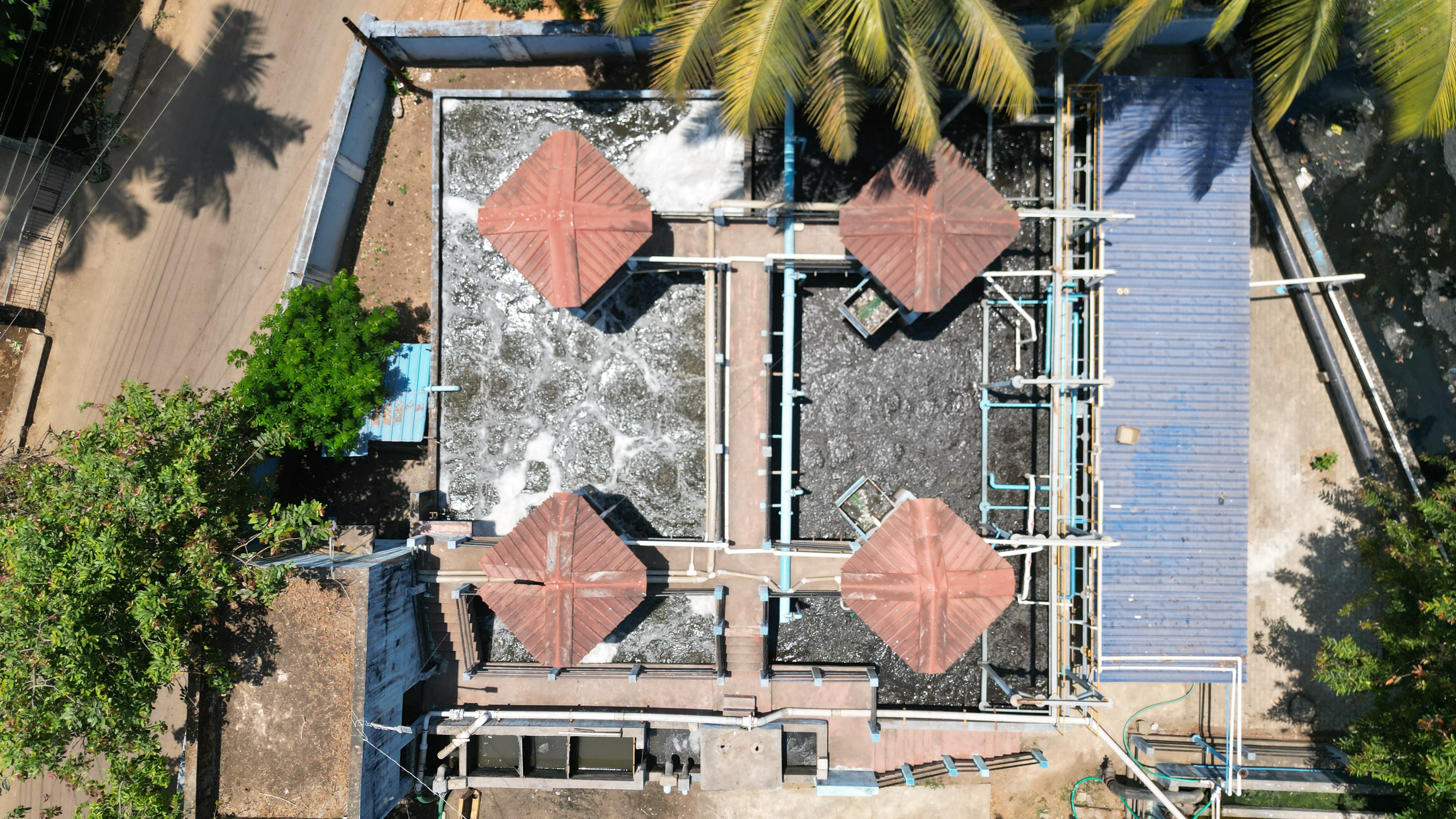
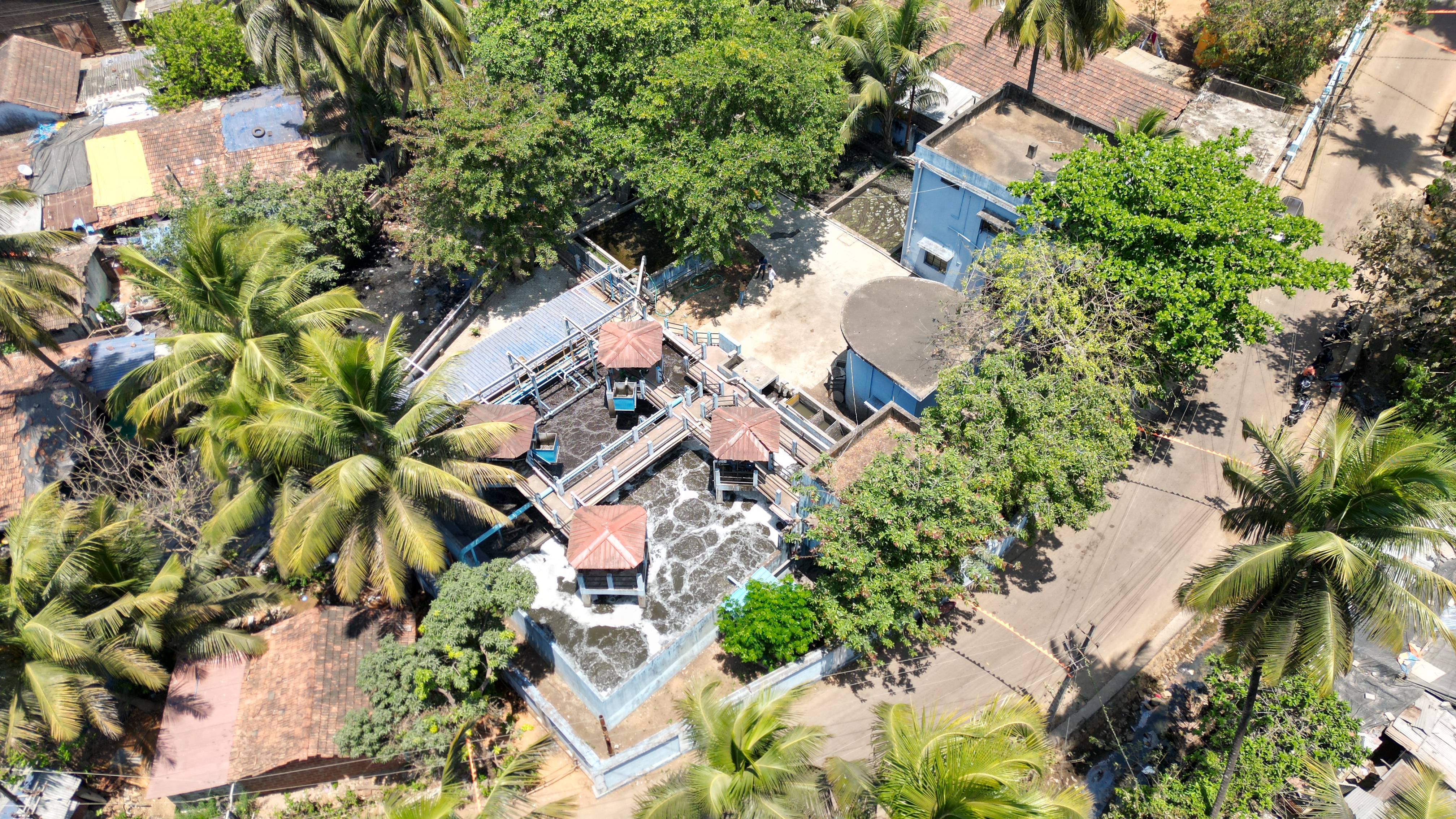
At Karwar, the challenge was not simply to treat sewage. It was to transform a space-constrained and underperforming municipal plant into a reliable system that could handle real-world load variations, support reuse, and reduce the environmental burden on the city.

Overview

Location: Karwar Capacity: 1.6 MLD MBR-Based STP Sector: Municipal Sewage

Urban sewage systems are no longer just about treatment and discharge. Advanced technologies like MBR, real-time monitoring, and automated control systems enable cities to achieve consistent compliance, handle variable loads, and produce reuse-quality water within limited space. When designed well, these systems shift wastewater from a burden into a reliable urban resource, supporting reuse, reducing freshwater demand, and improving overall city resilience.

Aapaavani’s intervention helped the city upgrade the existing facility into a compact 1.6 MLD Membrane Bioreactor-based treatment system with minimal civil work.

The Challenge

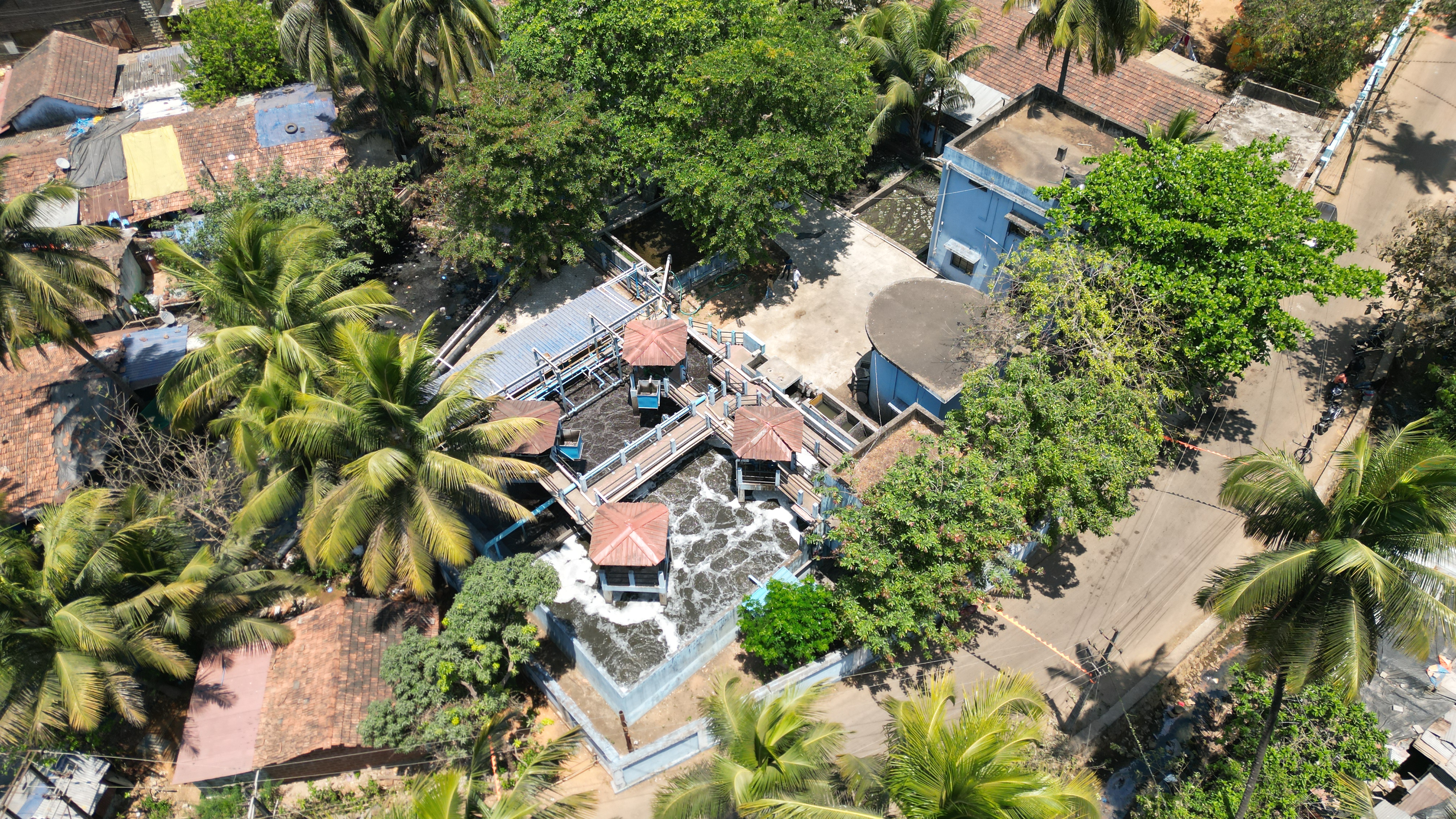
The challenge was not a lack of infrastructure. It was a mismatch between the plant’s design assumptions and its actual operating conditions. The site was fully congested, leaving no room for conventional expansion.

  • Underperforming Design: The original plant evolved from an SBR system to a conventional Activated Sludge Process (ASP). Designed for 1.6 MLD, it effectively treated only about 600-700 KLD.
  • Structural Failures: Insufficient equalization tank, deep invert level sewer entry, continuous pumping without flow balancing, and an undersized rectangular clarifier led to poor solids separation.
  • Difficult Influent Quality: The plant received septic tank sludge along with regular sewage. This pushed Total Suspended Solids (TSS) to roughly 380 to 400 mg/L, despite moderate organic strength (BOD ~300 mg/L, COD ~550 mg/L).

The Solution

If the plant had to be upgraded, it had to happen within the existing space footprint, with a technology that could deliver higher treatment efficiency. That is what led Aapaavani to propose an MBR-based revamp, redesigning the plant around the infrastructure already available on site.

  • Biological Zoning: One of the existing tanks was converted into an anoxic zone to support nitrogen removal. The remaining volume was used as an aeration zone, providing a hydraulic retention time of about 6.5 hours.
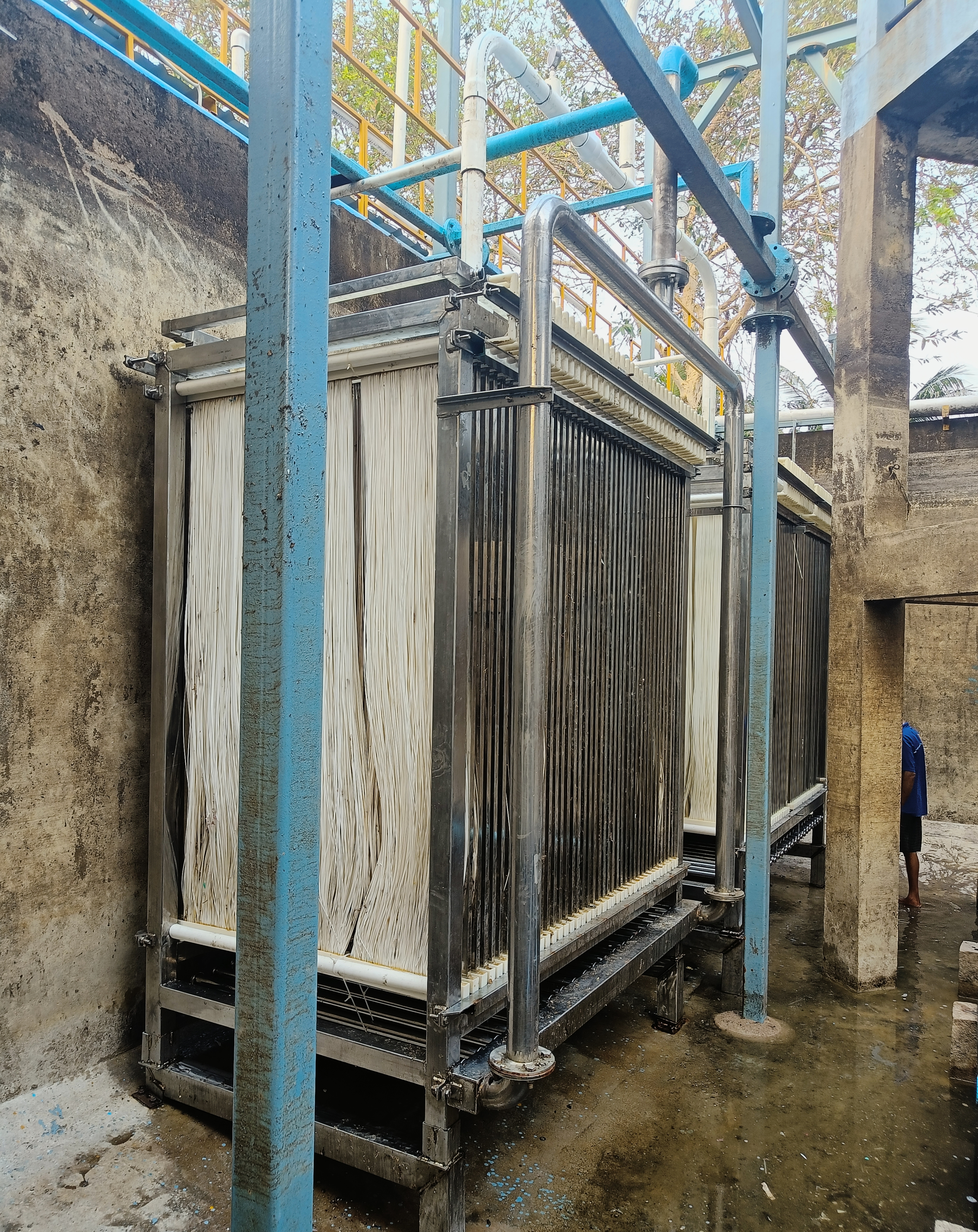
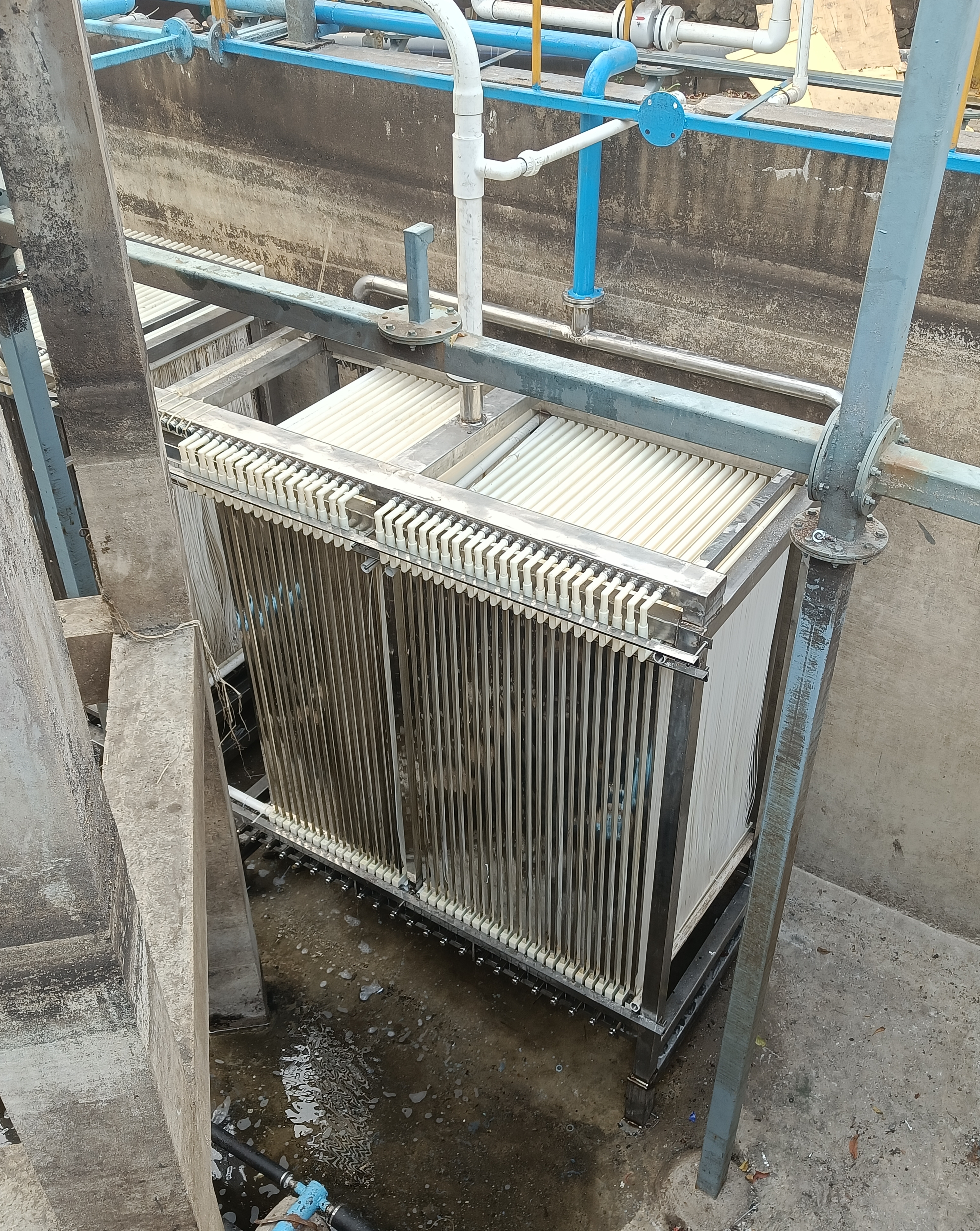
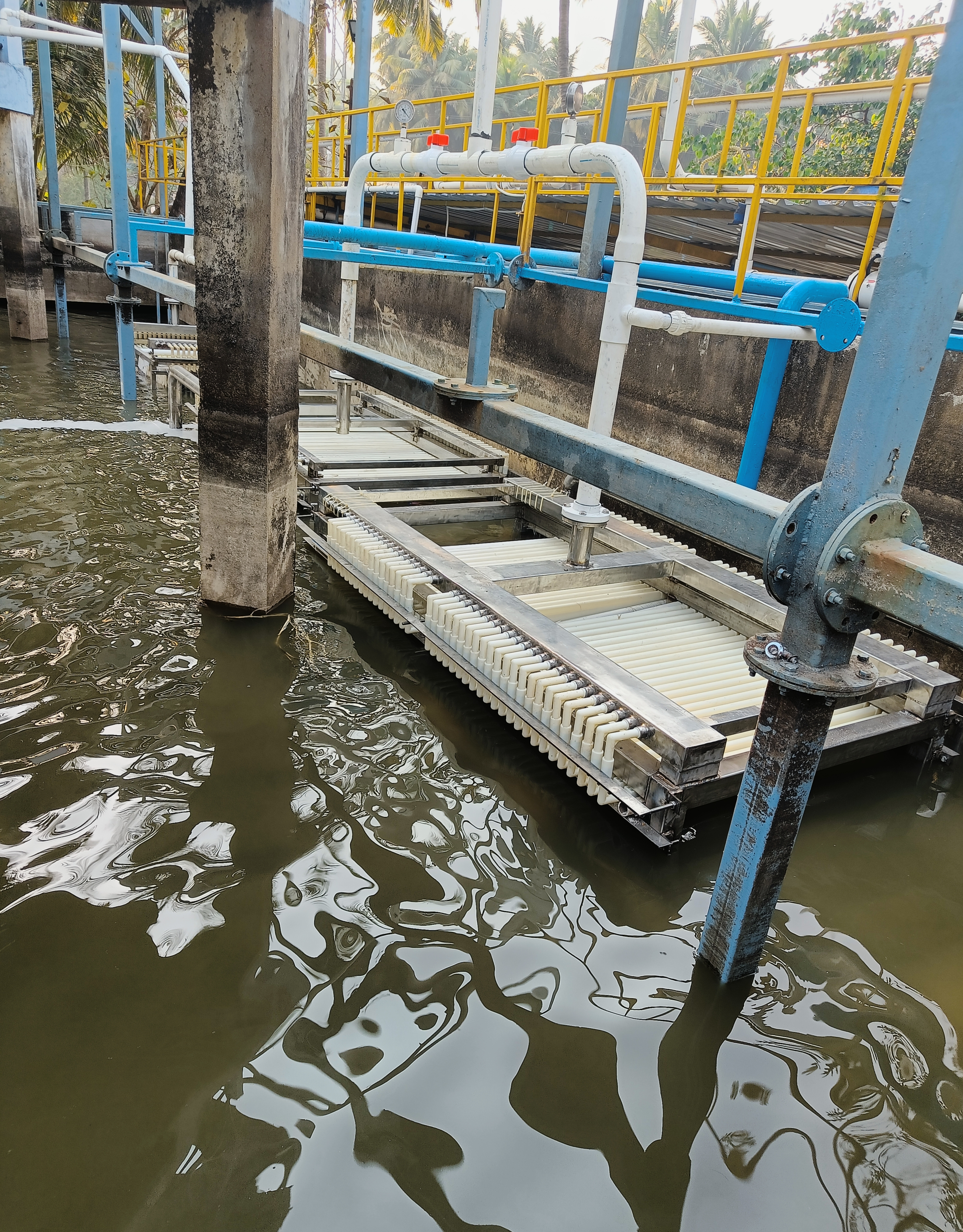
  • MBR Integration: A 1.5 MLD Membrane Bioreactor (MBR) system was installed to ensure efficient solid-liquid separation and produce consistently clear treated water.
  • Repurposed Clarifier: The old rectangular clarifier was repurposed as a chlorine contact tank, adding sodium hypochlorite dosing for effective disinfection.
  • Smart Automation & Monitoring: Automated with PLC-based control and integrated with IoT for remote monitoring. Aapaavani also established an on-site laboratory to monitor BOD, COD, total nitrogen, TSS, TDS, conductivity, and pH daily.

Operational Performance & Outcomes

After commissioning, Aapaavani operated and maintained the plant for two years. Performance remained strong and stable. In roughly 95% of the operating time, treated water BOD stayed below 5 mg/L, and TSS was typically below 1 mg/L. Membrane cleaning was carried out twice a year without needing to shut down completely.

(Lab-tested operating values from post-commissioning monitoring)

Sl No Chemical Parameters Units Inlet Result Maximum Permissible Limits
1 Chemical Oxygen Demand (COD) mg/L 400-500 <10 ≤50
2 BOD at 27 c (3 days) mg/L 250-300 <2 ≤10
3 Oil & Grease mg/L 1000-1200 <1 ≤10
4 Total Suspended Solids (TSS) mg/L 300-350 <1 ≤20
5 pH @ 25 C - 7.63 7.21 6.5 – 9.0

Reuse & Impact

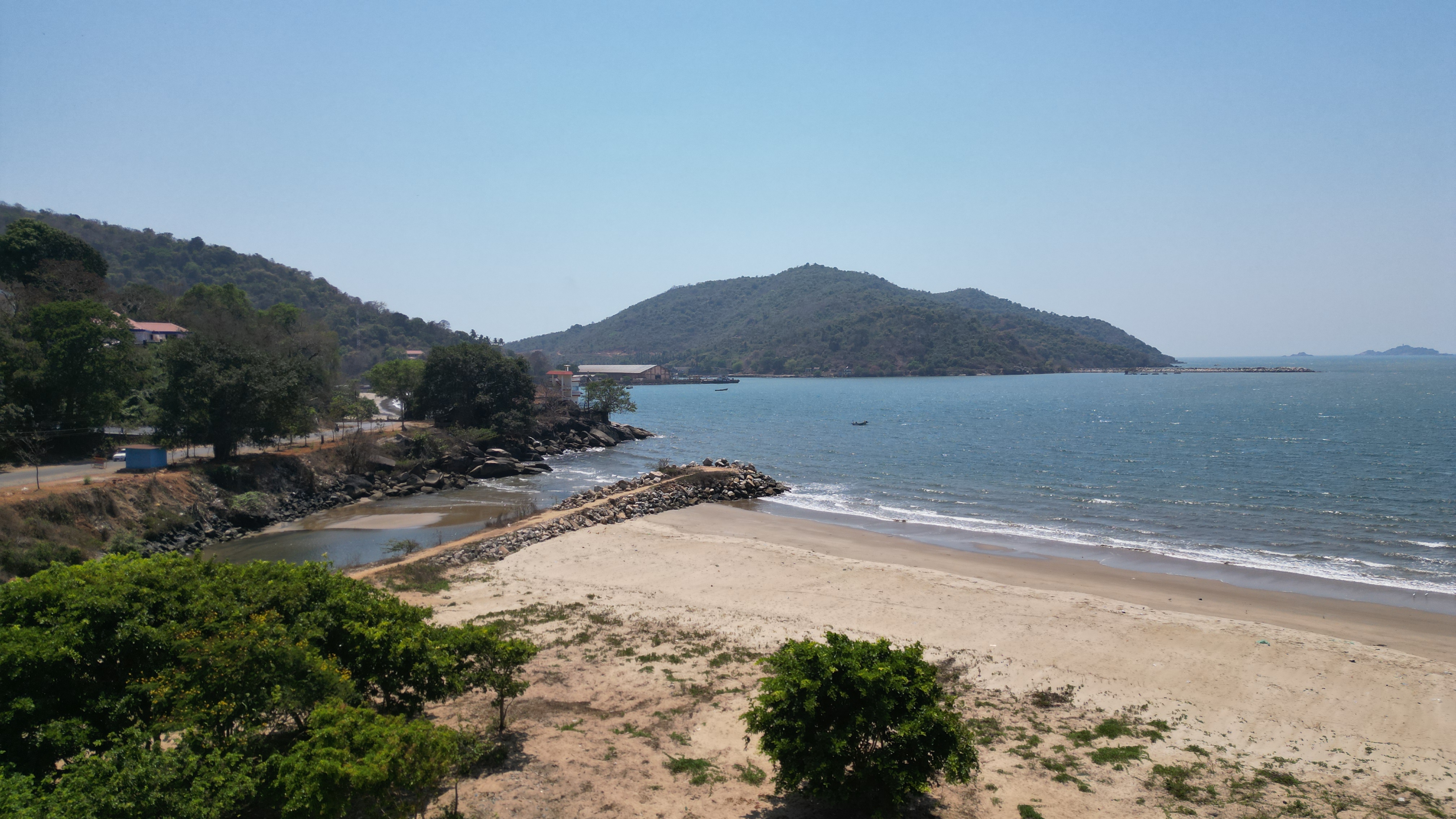
The vision of the Urban Local Body at Karwar was to reuse the treated water, and that is one of the most impressive parts of this story. Rather than treating sewage as a waste stream to be discharged and forgotten, the municipality built a 50 lakh litre storage reservoir near the seashore and created a toll-free system for citizens to request treated water tankers at a nominal cost.

water_drop
This treated water was used for plantation irrigation, dust suppression, and curing during nearby National Highway construction. More than 10,000 saplings were planted using this water, contributing to broader city landscaping efforts.

Why This Project Mattered

Karwar was a key learning project for Aapaavani. It proved that even highly constrained large-scale municipal plants can be upgraded successfully when the design is built around real site conditions, not theoretical assumptions. More importantly, it showed that treated wastewater can become a civic asset when engineering, operations, and reuse are designed together.

Want this outcome for your plant?

Request a 48-hour diagnostic: we’ll assess whether a scientific re-engineering can restore performance, reduce footprint and unlock water reuse for your plant.

Business & Operational Impact

The upgrade turned a congested, underperforming plant into a high-efficiency municipal asset. It reduced manual intervention, improved reliability, and converted treated sewage into a usable city resource. Just as importantly, it gave the municipality a repeatable framework for water reuse instead of one more discharge problem to manage.

Process diagram + 3D layout
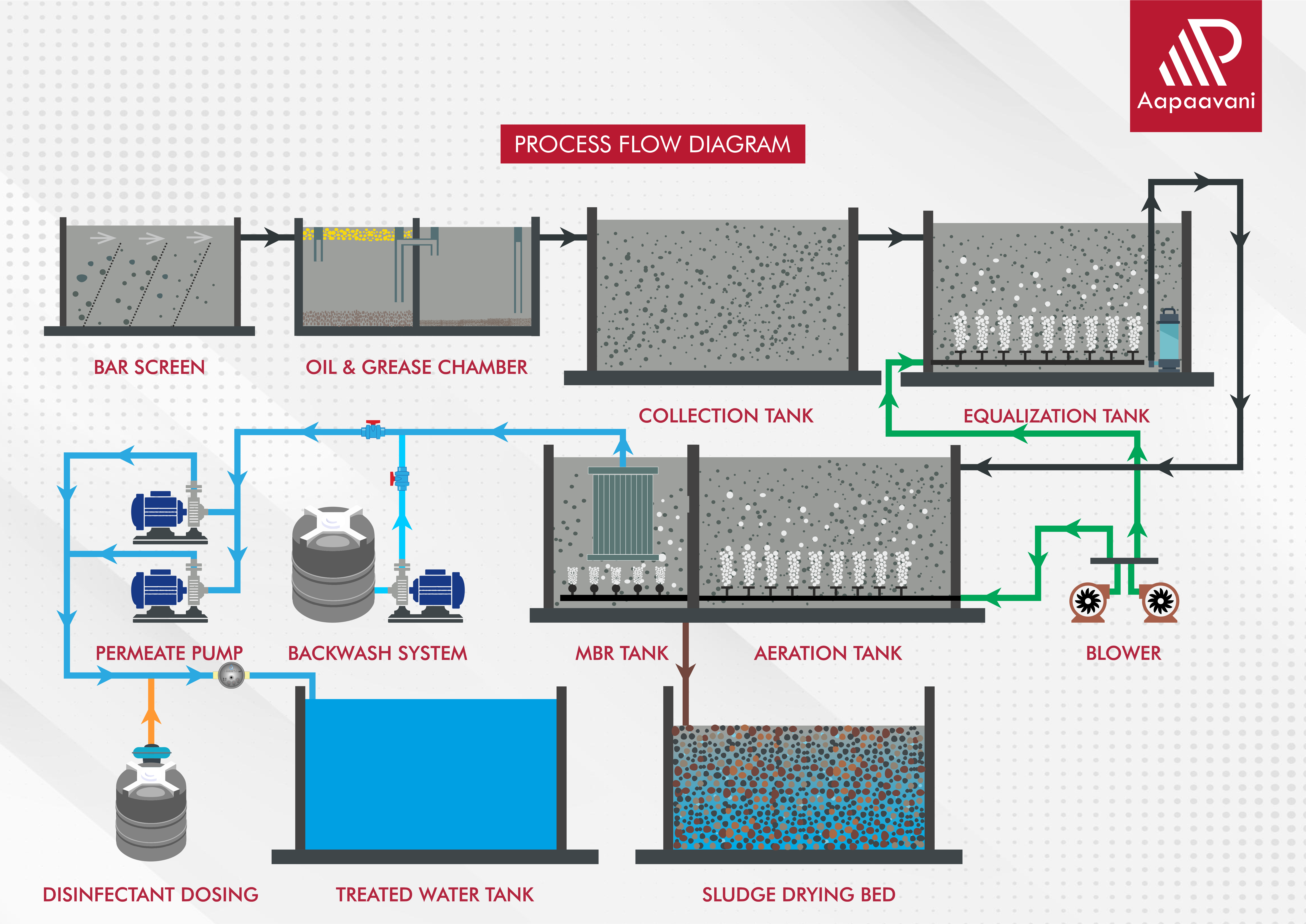
Process Diagram

Client Perspective

“The revamp project helped the system move from shock-instability, sludge bulking, odour and manual operation to a compact, MBR-based design that was easier to run and more consistent in output. We thank the Aapaavani team for helping us convert a struggling old system to a compact, automated MBR layout, contributing to our larger vision of water conservation.”

— Senior Officer, Karwar City Municipal Council

Detailed Diagnostic & Approach

Background

During late 2020 and early 2021, Aapaavani was approached by an Urban Local Body to evaluate their existing sewage treatment plant. The concern was not just about treatment efficiency, but also about a nearby nala that was carrying untreated or partially treated wastewater through residential areas, creating serious environmental and public health issues.

The objective given to us was clear. Study the existing plant, identify the gaps, and suggest a practical solution to improve performance within the available constraints.

Existing System and Challenges

When we inspected the site, the treatment system had already gone through multiple modifications over time.

Initially, it was designed as an SBR system with two reactor tanks. However, due to operational challenges, it was later converted into a conventional activated sludge process with a small secondary clarifier.

The plant was expected to handle around 1.6 MLD of sewage. But in reality, it was only able to treat about 600 to 700 KLD effectively.

There were several limitations.

There was no proper collection or equalization tank. The incoming sewer line was at a very deep invert level, which created large dead storage zones. Because of insufficient holding capacity, wastewater was being pumped continuously without proper flow balancing.

The secondary clarifier was undersized and rectangular in shape. It was designed for a lower loading rate than what was actually coming in. There were no proper weirs, which further affected its performance. As a result, solids separation was poor.

Another important factor was the nature of influent. Along with regular sewage, the municipality was also bringing septic tank sludge from households. This increased the suspended solids significantly, with TSS reaching around 380 to 400 mg per litre.

However, the organic strength was relatively moderate, with BOD around 300 mg per litre and COD around 550 mg per litre. Nitrogen levels were not very high, as much of it had already been stabilized in septic tanks before reaching the plant.

Space Constraint and Design Decision

One of the biggest challenges was the lack of available land.

The entire site was already occupied by existing infrastructure. There was no scope for constructing additional tanks, either underground or above ground. The facility was completely congested.

Under such conditions, conventional expansion was not possible.

This led to a clear conclusion. If the plant had to be upgraded, it had to be done using a compact and high-efficiency technology that requires lower retention time and minimal footprint.

Based on this, we proposed upgrading the system to a Membrane Bioreactor.

Process Design and Implementation

We redesigned the treatment system by utilizing the existing infrastructure as much as possible.

One of the existing tanks was converted into an anoxic zone to support nitrogen removal, even though the nitrogen load was not very high. This provided flexibility for future variations.

The wastewater then entered the aeration zone. The available volume allowed us to maintain a hydraulic retention time of approximately 6.5 hours, which was sufficient when combined with membrane separation.

A 1.5 MLD MBR system was installed. The membrane units ensured effective solid-liquid separation, producing very clear treated water.

The old rectangular clarifier was repurposed as a chlorine contact tank. Sodium hypochlorite dosing was introduced to ensure disinfection before final reuse or discharge.

The entire plant was automated using PLC-based control and integrated with IoT for remote monitoring. Key operational parameters could be tracked in real time, enabling faster response to any variation.

We also established an on-site laboratory to monitor parameters such as BOD, COD, total nitrogen, TSS, TDS, conductivity, and pH on a regular basis.

Reuse Strategy and City Impact

One of the most impressive aspects of this project was the vision of the Urban Local Body.

Instead of simply discharging treated water, they created a reuse ecosystem.

A 50 lakh litre storage reservoir was constructed near the seashore. Treated water from the plant was conveyed to this reservoir.

A toll-free system was introduced where citizens could request treated water tankers at a very nominal cost.

This water was extensively used across the city.

  • More than 10,000 saplings were planted, and treated water was used round the clock in shifts for irrigation.
  • During National Highway construction nearby, the treated water was used for dust suppression and curing activities.
  • Public access to treated water created awareness and acceptance of reuse.

Operational Performance

After commissioning, Aapaavani handled operation and maintenance of the plant for two years.

During this period, daily monitoring of key parameters was carried out.

The performance was consistently strong.

  • In about 95 percent of the time, treated water BOD was less than 5 mg per litre.
  • TSS was typically below 1 mg per litre.
  • The water quality was visually clear, with effective membrane filtration in the micron range.

There were very few instances where BOD exceeded 10 mg per litre. These were short-duration events, typically linked to natural biological cycles such as endogenous respiration phases. Such deviations were quickly identified and corrected.

Membrane Maintenance and Reliability

Membrane maintenance was planned and executed efficiently.

Cleaning was carried out twice a year. The system was designed with multiple membrane modules, allowing cleaning of one unit while others continued operation. This ensured there was no complete plant shutdown.

Aeration systems were also designed with working and standby blowers, maintaining continuous oxygen supply without interruption.

Learning and Technical Strength

This project gave us deep practical insights into membrane bioreactor systems.

We gained clarity on important aspects such as membrane flux selection, cleaning frequency, chemical dosing, and operational control strategies.

Since the influent was relatively stable compared to industrial effluents, it provided an ideal platform to understand membrane behaviour without excessive disturbances.

This experience later helped us confidently design and operate larger MBR systems, including those handling complex industrial wastewater.

Conclusion

The successful upgrade of this 1.5 MLD sewage treatment plant demonstrated that even highly constrained sites can be transformed with the right technology and approach.

More importantly, it showed how treated wastewater, when managed properly, can become a valuable resource for the community.

For Aapaavani, this project strengthened our technical foundation in MBR systems and reinforced our belief that engineering solutions must go beyond treatment and create real impact on the ground.

Dr Vishnu Sharma A
Founder and Director, Aapaavani Environmental Solutions